A Peruvian, a Pakistani, a Filipino, a Central Asian, and an American get pulled over at a checkpoint.
No, this is not the start to a bad joke. But it is, in fact, how I learned that locals believe Christian clergy can do black magic.
In truth, you never can predict when these kinds of insights might emerge that reveal what the locals really believe. On this day, our source of cultural illumination surprisingly appeared from one of the least enjoyable parts of living in Central Asia. That is, the inescapable, and often petty, government bureaucracy, military checkpoints on the road being one particularly tedious expression of this.
For this particular trip, I was on an outing with four friends, and we were coming back from a long day of exploring some fascinating ancient sites together. Three of them (Peruvian, Pakistani, and Central Asian) had just finished a year-long pastoral internship under the leadership of the Filipino brother, himself a TCK who now serves as one of our pastors in Caravan City. We had been planning for some time to take this kind of trip together. And the timing of it, coming just a few days after the internship finished, made it a fun and celebratory time.
We knew that our unique carload, itself a sort of mini UN, would likely raise eyebrows at the half dozen checkpoints we’d need to pass through during the day. So, all of us had our documents on us. All of us, that is, except for the Peruvian brother. His documents were with the lawyer for his visa renewal process. However, we weren’t worried. He had pictures of his IDs, something accepted by the guards when the visas and passports of those traveling are tied up in other layers of bureaucracy elsewhere. No ID on you for some random reason? Big trouble. No ID on you because your lawyer is (so you say) getting your visa renewed? No problem! Carry on.
The checkpoints proved seamless all day long, until the very last one, as we were on our way back late at night. Here, as soon as the guard laid eyes on the Peruvian and heard us begin to say that he didn’t have his documents, he ordered him to head inside the station for further questioning. The soldier made this snap judgment and began to walk away without letting us plead our case, so I yelled out as quickly as I could,
“But… respected one… he’s of the people of Peru… his documents are with the lawyer for his visa renewal! Visa renewal!”
Missionaries from Latin American countries have both the advantage and the disadvantage of looking like they are from our region, Central Asia. It was likely that the guard had assumed from appearances that the Peruvian was from a neighboring rival people group – and had therefore plopped him into some sludge-slow process of window and desk hopping seemingly designed to be as convoluted as possible.
This last-minute plea seemed to cause the guard to reconsider and relax a little bit. He turned back to us, still told the Peruvian to go inside to a certain room, but allowed the Central Asian brother to go with him for the sake of interpretation.
The rest of us sat in the car and hoped for the best, barely fending off yet another guard who approached and attempted to send us all inside.
As we waited in the dusty darkness, the Peruvian and the Central Asian made their way into the captain’s office. From a similar situation in the previous weeks, I knew the room’s layout followed the standard formula. Large and pretentious desk facing the door, hard couches lining the walls, plenty of ashtrays and tea tables, a rickety swamp cooler whirring in the window, and photoshopped pictures of benign-looking government strongmen up on the walls.
The captain was not in a good mood, so our friends were not making much headway trying to explain their case. That is, until the Central Asian dropped the fact that the Peruvian was actually a pastor. This was, in fact, true. He had been a pastor in Peru and had originally been sent to pastor a team of Spanish-speaking missionaries before later joining the internship for more training.
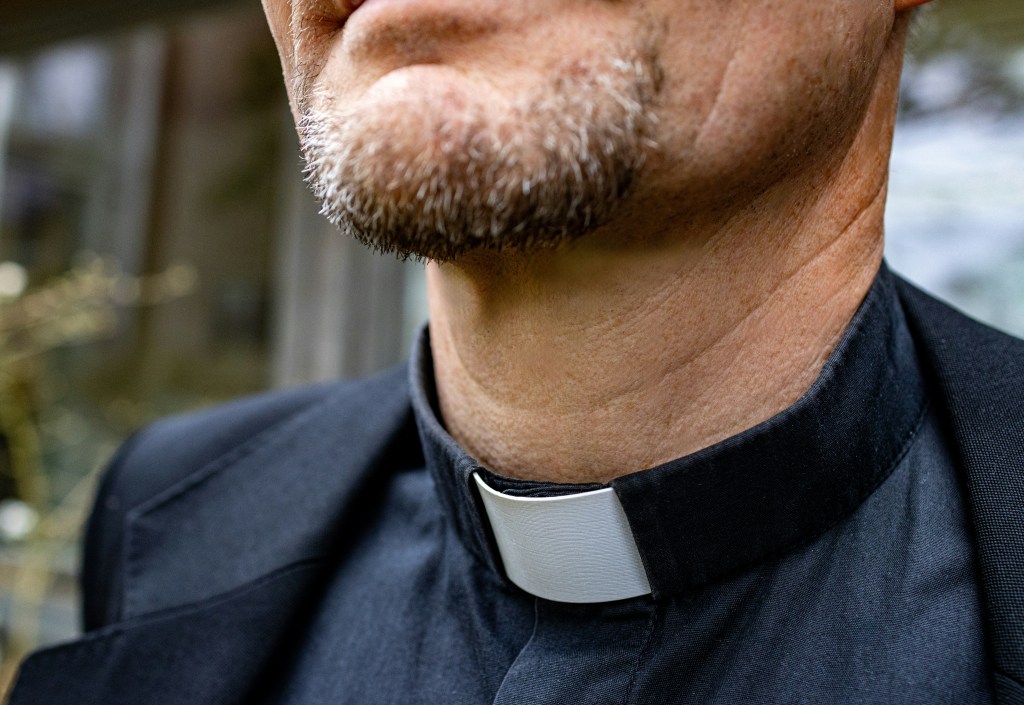
There is something in the wiring of our local Muslim Central Asians, such that once they find out a man is actually a ‘priest,’ their entire bearing towards him changes for the positive. We’ve seen this dynamic so often here over the years that we’ve begun to joke that rather than hiding the pastoral background that many of us have (as is the norm), we should instead start going around wearing protestant clergy collars. At least in government offices, this contextualization of our garments would make a huge difference. In this, Central Asia has proved yet again to be utterly different from our assumptions of how it would be.
Accordingly, the captain decided that, since our Peruvian friend was a priest, there was no issue here whatsoever, and that he could go his way. However, in parting, he also slipped in a joke to the Central Asian brother.
“Ask him if he could do some black magic for me, brother, har har har.”
Finding discretion to be the better part of valor, our friends took the opportunity to smile and leave quickly, rather than staying to correct the captain that, no, as a pastor, our friend most certainly did not and would not do black magic. As no true pastor should.
“Wait,” I asked my friends when they were back in the car, “locals think pastors do black magic?”
“Yes,” the Central Asian brother replied, “I’ve heard it from my older relatives many times. They used to go to some kind of ethnic Christian priest to get him to do spells and charms for them – things having to do with fertility or love, especially.”
Apparently, some of the clergy from the local ethnic Christian communities had, over time, fallen into acting like the local Islamic sheikhs, themselves having fallen into acting like the older mages, shamans, and witch doctors so common all over the world. Appease and manipulate the spirits for your own blessing and the cursing of your enemies. The same demonic strategy used in the Melanesia of my childhood, recycled here with just a smidge of Central Asian monotheistic veneer.
I was reminded of how I’d heard that even one of the few evangelical pastors among our people group had himself started acting weird in these ways, sheikh-ish, making people who asked for healing to drink Bible verses he’d written on little pieces of paper. I wondered if he had also grown up hearing from his relatives of how this was simply what Christian clergy are supposed to do.
I’m very glad this bit of local data emerged, even though it came through something as tedious as a government checkpoint. Who knew that this was something so commonly assumed among our locals, lurking down in the basement shadows of their worldview? Now we know. And now we can proactively teach against it. No, true pastors should not and do not have anything to do with black magic. Yes, they may be involved in the occasional miraculous healing or quiet casting out of a demon. But this is not magic; this is simply the Holy Spirit at work in the normal life of the local church.
No, Mr. Captain of the checkpoint, we won’t do black magic for you. But if you hear us out, we can tell you about something infinitely more powerful.
We need to raise 28k to be fully funded for our second year back on the field. If you have been helped or encouraged by the content on this blog, would you consider supporting this writing and our family while we serve in Central Asia? You can do so here through the blog or contact me to find out how to give through our organization.
Two international churches in our region are in need of pastors, one needs a lead pastor and one an associate pastor. Our kids’ TCK school is also in need of a math and a science teacher for middle school and high school. If you have a good lead, shoot me a note here.
For my list of recommended books and travel gear, click here.
Photo from Unsplash.com

 Entrusted to the Dirt
I just read this post, and wow, it’s a refreshing take on the role of pastors—especially with that playful twist on the “black magic” bit! It’s not every day you get to read something that challenges stereotypes while keeping the tone light and engaging. The author does a great job of breaking down how pastors are meant to guide, lead, and inspire, far beyond the common misconceptions. It’s like they’re reminding us that faith leaders can be approachable, real, and, well, human. I particularly love the way it dismantles the idea that pastors are distant or somehow mysterious figures. The post takes a no-nonsense approach while keeping things personable and down-to-earth. It’s a great read for anyone who’s ever wondered about the true role of a pastor—without the Hollywood drama! Definitely worth a look if you want to rethink the “pastor” label in a more grounded way.
LikeLike