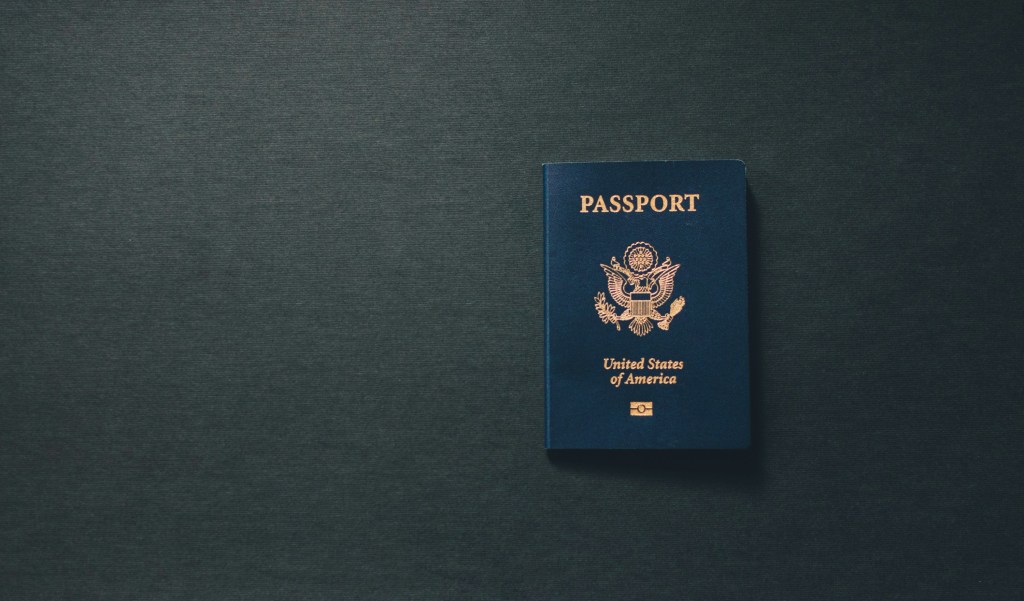
“I’m sorry, sir, the police require it.”
The rental car employee behind the desk looked strangely like a Central Asian Laurence Fishburne. And he spoke with a similar self-assurance. I half expected him to pull out some colored pills and start telling me about the nature of reality.
“But I need my passport to travel between cities,” I countered.
“Inshallah they will accept your residency card instead. But in order to rent a car, you must leave your passport with us here. Otherwise, the police will penalize us. You’ll get it back next week when you bring the car back.”
I shot a questioning look at my wife. She shrugged with resignation and sipped her chai, signaling that she’d be happy to let me make the call on this one.
Leaving your passport overnight with someone else is never a good idea in a region like ours. The normally stable security situation might suddenly spiral out of control, calling for a quick evacuation. In fact, even as we sat in the car rental office on that sunny afternoon, missiles had just the previous week cut through the sky directly above our city, en route from one country to another as they took turns hitting each other in another round of geopolitical saving face.
But all indications on the ground were that our security status quo would continue. And we needed to get our son to his first ever Discipleship Now gathering happening for expat teens several hours away in Poet City*. Worst case scenario, my family could fly out of the country without me while I tracked down rental car Morpheus to get my passport back as the country melted down.
In this whole exchange, I couldn’t help but be reminded of the time I’d been required to leave my passport overnight in order to check out a library book. Yes, a library book. If you’ve never thanked God for the common grace that causes people to return rental cars and library books, you probably should. Because when this common grace is absent from a society, they will go to extreme measures to guarantee you bring their stuff back.
Years ago, the government of our region conducted a rather controversial referendum when every other government told them not to. So, to punish them for going ahead with it, the rest of the other governments did their best to lock our region down. Airports were closed, borders sealed, and Shia militias massed nearby preparing for a potential invasion. One border crossing remained open, plus one air route through an unfriendly airport that included a substantial fine. So, we still technically had two ways out if needed (when it gets down to only one way out, that’s usually the trigger for an evac). Things went on like this for a good several months, and thankfully, never got any worse. The Shia militia, for example, never came to town, in spite of Mercenary Dan’s* dire predictions and attempts to sell me armed evacuation transport.
In the end, diplomacy seems to have worked out an uneasy resolution. Its effect was such that ever since that time our region has been weaker, less prosperous, and less functional, but still mostly free and peaceful. Compared to war or invasion, that’s not a bad outcome. However, during the crisis itself, things got pretty sketchy there for a while. It was not a time to go without your passport – especially not for a library book.
But here was my dilemma. I had to write a term paper for a class I was taking online called History and Religion of Islam. It was an excellent class, even though it had a very heavy workload. For example, we had to read Ibn Ishaq’s massive official biography of Muhammad in only one week. I would not recommend this. If you’re working with Muslims, this is an important book to be familiar with, but please, be kind to yourself and read it over the course of several weeks or months.
For my term paper, I had settled on the topic of the Islamic conquest of our people group. Search as I might, I could not find a single book or even article in English that addressed this historical event. Much of this has to do with the identity of our people group. Even though they were definitely around back then, and in great numbers, they were a seminomadic mountain people. Authors tend to write history about the civilized cities in the plains and the majority people groups, not the nomadic minorities. No, the sources were almost nonexistent, so to put together a narrative of the conquest I would need to find a sentence in a chapter here, a paragraph in a book there. To do this, I would need to make use of Poet City’s public library.
Poet City is known as a city of writers. And in fact, the culture of writing, selling, buying, and discussing books is strong. But this does not mean that it has a good library. Something has gone wrong in the culture such that the same locals who would never steal cash from the overflowing money changers’ tables in the bazaar would steal a book from the library. Perhaps it is because the library is viewed as an impersonal institution rather than an entity connected to one’s relational network (thus requiring more honorable conduct). Because of this, the library is a neglected, distrustful place.
However, I had heard that there was a small English section, one which might include books about our area’s history. Upon visiting one afternoon, I found it. It was dusty, tucked away in a side area that few seemed to visit. But I couldn’t have been more excited. There were several books written by local historians that had been translated into English. These were books you couldn’t find online. The only way to read them was the old-fashioned way, by getting ahold of a rare physical copy. I had found gold.
It was when I went to figure out the checkout process that I discovered they wanted to confiscate my passport.
“No one is allowed to check out a book unless they leave us their national ID card or passport.”
“Uh, really? Why is that?”
“So that the books don’t get stolen.”
“I’m not going to steal the books. Isn’t there anything else I can leave? My phone number, my address?”
“No, dear, we will only accept your passport.”
“But you know we are in a security crisis. We are foreigners. We might be told to leave the country at any moment. And for that, I’ll need my passport.”
The librarian stared at me, not impressed with my argument.
“OK,” I continued, “where is the passport kept?”
“Here, in the library.”
“What if we are told to leave at night after the library is closed? Could I come and get my passport?”
“No, you would have to wait until the next morning to get it back.”
“I’m so surprised by all of this. There must be another way.”
“You can talk to the library director,” the librarian said, “but he will not agree to let you take a book out unless you give us your passport as a pledge.”
In the end, the library director and I were able to work out a compromise. He would keep my passport in his personal briefcase and take it home with him at night. We would exchange phone numbers. In case of emergency, I could call him in the middle of the night to return the books to him and get my passport back. This arrangement might seem even more sketchy to a Westerner than leaving it in the library. But in Central Asian culture, I sensed that making this kind of personal arrangement with the director actually moved things into more reliable honor-shame obligation territory, and out of the territory of institution and policy where locals might excuse themselves from any responsibility if it happened to be inconvenient.
Still, it was far from ideal. And I was pretty sure that if my teammates were in the country, they would never go for it. But we were on our own for this stretch of the crisis, so we would need to muddle along through the different risks as best we could.
Now, it probably says something about how much of a history nerd I am that I would take this kind of risk. But I have to say, it was totally worth it. How so? Well, one of those books contained the only local account of the Islamic conquest ever discovered.
The Arabs devastated the valley*
Abducted girls and women
Massacred the heroes
Extinguished the fire altars
This stanza of a longer poem of lament was discovered about a hundred years ago on a pottery shard in a farmer’s field. Written in an older form of our people group’s language, and using an old Christian alphabet, it’s the only known source from our people group from the period when they were conquered by the Islamic invasions of the mid-600s. All the other sources are written by the victors in official Islamic histories of the conquest a couple hundred years later, such as the accounts of the famous Islamic historian Al-Tabari. But this source that I stumbled upon was not only local, written by the conquered, but it was probably written much closer to the events themselves as well.
In contrast to the common narrative among our people group that they converted to Islam peacefully, these lines of verse tell a different story. According to this source, the Islamic invasions resulted in the devastation of their home areas. Women and girls were carried off as sex slaves. Defending soldiers were slaughtered. And the local Zoroastrian fire temples were destroyed.
The existence of this kind of local witness is quite a remarkable thing. It confirms what the Islamic sources later say. The conquest wasn’t peaceful. It was jihad. It was a bloodbath. And there it was, hidden away in an obscure book in a neglected library.
I spent that evening at home skimming the books I had checked out and taking pictures of the pages that I needed for my paper. Then, first thing in the morning, I rushed back to the library to return the books and get my passport back. The library director seemed surprised that I was back for it so soon. But for my part, I was not wanting to extend our risky arrangement any more than was absolutely necessary. Having accomplished the goal of the risk, it was now time to return to safer ground.
It was not too long after this that we found ourselves suddenly crossing the last remaining land border and making good use of those passports. A family wedding provided a good reason to get out of the pressure cooker, even if only temporarily.
Among our other activities during our three weeks in the US, we quickly applied for second passports. The laws in our host country were shifting and it looked like we’d have to send off our passports for a month or two to get a new kind of residency visa. But having two passports for each member of our family would mean we could do this and still be able to travel at a moment’s notice if needed.
And, just in case, if we needed to safely check out a library book or rent a car? Well, then we could do that too.
If you have been helped or encouraged by the content on this blog, would you consider supporting this writing and our family while we serve in Central Asia? You can do so here.
For my list of recommended books and travel gear, click here.
*Names of places and individuals have been changed for security
Photos are from Unsplash.com

 Entrusted to the Dirt