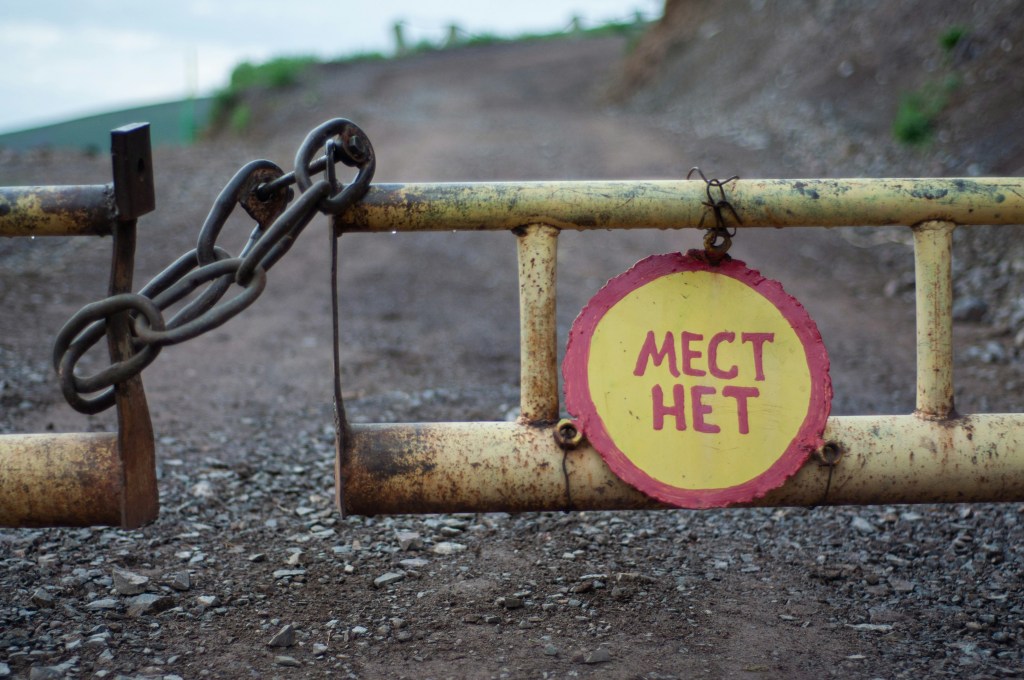
What are the common barriers that keep the gospel from spreading from one group of humans to another? How can one group have a strong presence of believers and churches and yet live side by side with other groups that are completely unreached? The answer to this question is not as simple as it might seem.
The modern missionary movement mainly used geographic and political lenses when they sought to evangelize the world. William Carey’s An Enquiry into the Obligations of Christians to Use Means for the Conversion of the Heathen featured a list of the world’s countries, their population sizes, religions, and other statistics. Mission agencies followed suit until the late 1900s, focusing mainly on countries and political boundaries when they sought to organize their missions strategy. This is not without biblical precedent. In the book of Acts, we see that Paul’s missionary strategy is focused on the cities and provinces of the Roman Empire. Paul and Luke are using a geographic lens when they seek to apply the Great Commission (along with a very broad ethnic lens of Jew vs. Gentile). Paul’s ambition is to preach to the Gentiles in places where no one else has yet laid a foundation (Rom 15:14-24).
Political and geographic borders and systems can absolutely provide barriers to the gospel. Consider the great contrast of the two Koreas. South Korea, one of the most Christian nations on earth, neighbors North Korea, one of the most unreached. With the same language, ethnicity, and historically the same culture, what is the barrier? The DMZ and the North’s communist/cult of personality government that seeks to stamp out Christianity.
However, the nation-state lens of modern missions was insufficient to recognize other massive barriers to the gospel. 20th-century missiologists like Donald McGavran and Ralph Winter demonstrated that this political and geographic lens meant that there were thousands of “hidden peoples” who were completely overlooked because of the ethnic, linguistic, or cultural barriers that existed even within countries. A missions agency might consider a country reached because of a strong presence of Christianity among the majority ethnicity, but with their nation-state lens fail to see that the minority ethnicities were completely without a witness.
Starting in the late ’70s, this led to a paradigm shift in missions, where agencies adopted the primary lens of unreached people group (UPG). This ethnolinguistic lens also has biblical precedent, with a strong thread of God’s heart for all peoples (panta ta ethne) evident throughout the Bible. We see this focus on ethnicity and language in passages like Psalm 67:4, Isaiah 66:18, Daniel 7:14, and most famously, Rev 7:9, “a great multitude that no one could number, from every nation, from all tribes and peoples and languages…”
This lens seeks to recognize three other significant barriers to the gospel: ethnicity, language, and culture. It recognizes that humanity typically divides up into groups that identify as distinct from others around them along significant ethnic, language, or cultural lines. Sometimes ethnicity is the main barrier, where the same language is used and similar cultures exist, but neighboring people groups struggle to influence one another because of longstanding ethnic tensions. This is the case with many ethnic Christian groups in the Middle East and their Muslim neighbors, all of whom are fluent in Arabic.
Other situations show that focusing on ethnicity alone is not enough. Our own central Asian people group share a common ethnic identity with neighboring groups, but their languages are not mutually intelligible. In this case, language is the primary barrier, not ethnicity or culture. A missions agency might see the church take off in one of the dozen or so language groups of this ethnicity and consider their job done. In reality, this language barrier is going to prevent the spread of the gospel to the other segments of this ethnicity unless there is a very intentional effort.
Yet other situations show that culture can be the primary barrier. This is where things can get really murky, yet an honest appraisal of how humanity actually functions shows that this is often the case. Cultural differences provide significant barriers to the gospel. This is where socio-economic, religious, and even generational differences come into play – and evil things like caste. For evidence near at hand, consider how hard it is for middle-class churches to reach the poor and working class, and vice versa. It is very difficult for any of our churches in the West to truly impact subcultures different from ours that live within our own cities and towns, and this is with a shared history of Christianity. How much more might cultural differences prevent gospel impact among groups that have no Christian heritage? Even here there is biblical precedent for acknowledging this barrier. Many of the Jew-Gentile issues that Paul deals with in his letters are not just issues of religious background and conscience, they are issues of differing systems of culture and meaning – head coverings being one example.
The key is to recognize that multiple barriers exist to the spread of the gospel from one group of humans to another. These barriers might be political, geographic, ethnic, linguistic, or cultural. The Bible acknowledges all of them. That means we don’t have to lock ourselves into only one lens; rather, we should make use of all of the lenses the Bible gives us when we are seeking to discern why the gospel might be making inroads in one group and not among others.
Once we’ve recognized the primary barrier or barriers, then we are in a good place to discern if they are significant enough to warrant a separate church planting focus or not. Typically, I believe that geography and language do warrant separate approaches, while ethnicity and culture need to be taken on a more case-by-case basis. This needs a post of its own, but in brief, we must remember that the New Testament church brought Jew and Gentile, Greek and Barbarian together into the same churches, messy and scandalous though that effort was. The splintering of missions strategy into hyper-specialized church planting efforts can often reinforce natural human divisions, rather than overcome them.
Deep divisions cut through lost humanity, cutting off whole countries, peoples, languages, and cultures from the good news of salvation through Jesus. Yet the Bible shows us that these can and will be overcome. To play our part in this we will need to take these barriers seriously, on the one hand, even as we trust that the simple gospel is powerful to conquer each and every one of them. We must work hard to understand and undermine these barriers, though our faith must not be in our ability to figure them out.
Carey understood “the Obligations of Christians to Use Means in the Conversion of the Heathen,” even as his faith was in the sovereign power of God to save the nations. May we follow in his footsteps – til every barrier falls.
As of the publishing of this post, we’ve raised 24% of our family’s support needs to return to the field! Some are giving directly through the blog, here. Others are giving through our non-profit. Both are very helpful, whether monthly or one-time gifts. We would be honored for you to partner with us in this way and help us bring in the remaining 76%. Write us for more info about how to give or with any questions you might have.
For my list of recommended books and travel gear, click here.
Photos are from Unsplash.com

 Entrusted to the Dirt
Excellent article! Truly shows our need to pray daily for the hearts of all mankind and for the missionaries. May the Lord send laborers into the harvest! May the Lord God grant that ALL draw near to Christ Jesus! Thank God, that the gospel itself is literally the power of God for salvation! May God give the growth to the seeds that are planted and watered by these beautiful souls in the mission field!
LikeLiked by 1 person